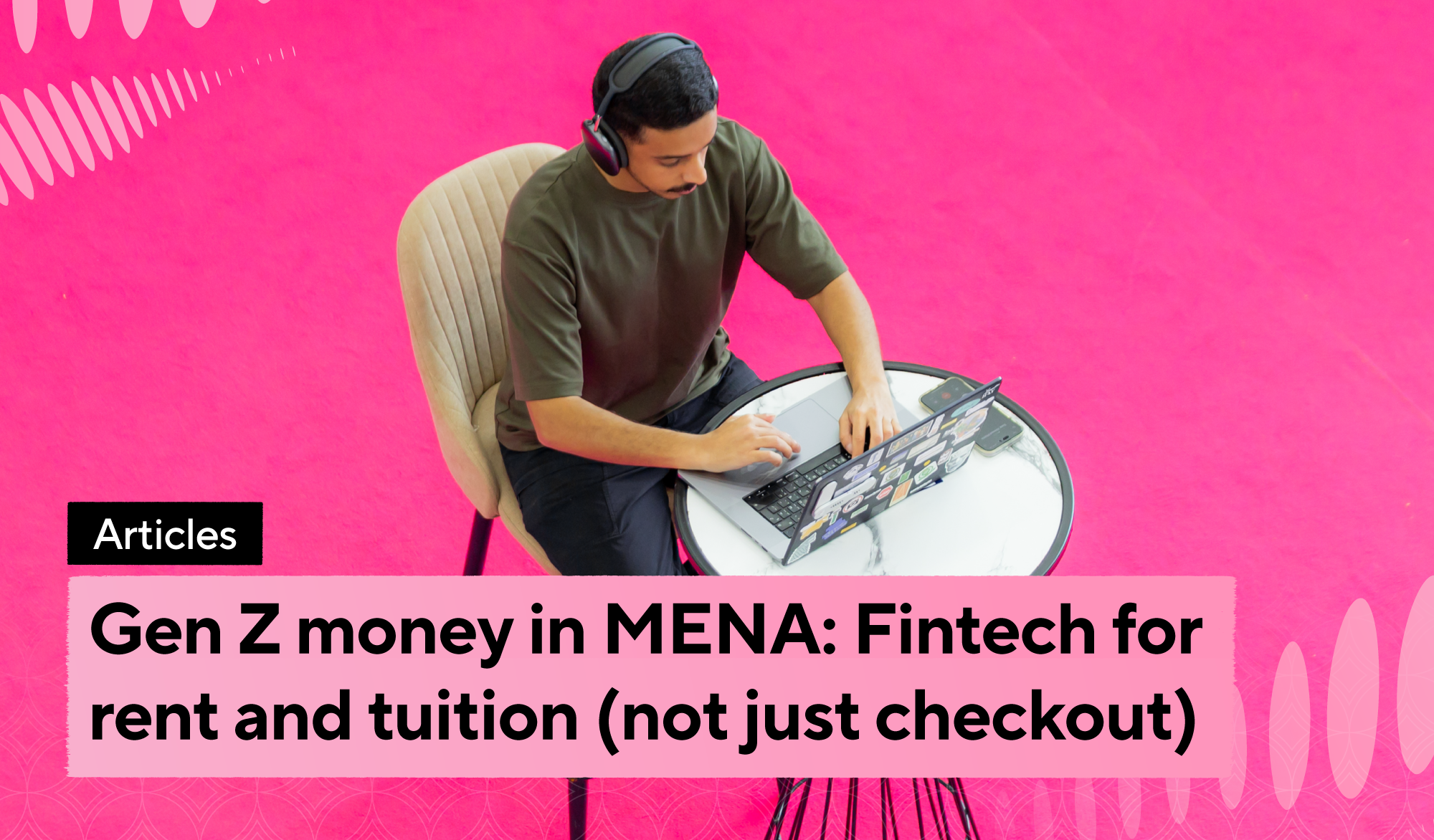
Ask a 23-year-old in Dubai or Riyadh what stresses them out financially, and they’re likely to talk about rent, or tuition, or unpredictable cash flow (or all of the above). But traditional banking rarely touches these friction points.
At the same time, Gen Z is shaping the region’s payment rails. Research from Mastercard shows nearly half of Gen Z globally prefer new digital payment methods, and 65% want to manage everything in one place.
That mindset is even sharper in the Gulf, where digital commerce is the norm. Checkout.com reports that 98% of Instashop orders in the UAE are paid digitally versus about 75% in Egypt – and half of consumers say they’d lose trust in a brand over poor payment performance.
Young users are digital-first, but they’re intolerant of bad UX, opaque fees or slow rails. And this is an important backdrop for what’s coming next.
BNPL: the training wheels for modern credit
Buy Now, Pay Later is now often Gen Z’s first credit relationship in the Middle East. According to a report by Research and Markets, the market was expected to reach USD $5.79 billion in 2025 and climb to $11.74 billion by 2030, with a double-digit growth curve powered by youth-led e-commerce.
A complementary MEA-wide view from Mordor Intelligence shows Gen Z is the fastest growing BNPL cohort, expanding at a CAGR of about 23.7% between now and 2030. Fintechs still dominate the category, controlling over 70% of MEA BNPL volume.
This is significant, because it shows that BNPL is becoming the first access to credit for young people with thin files. The product is simple, and it feels safer than a revolving credit line. The question, then, is what BNPL will unlock next for its first-time users.
When ‘pay later’ moves into rent and education
BNPL at checkout is one thing; but the ‘pay later’ model gets more interesting when it’s applied to life essentials.
And Rent Now, Pay Later (RNPL) has the potential to move from fringe to mainstream.
In Dubai, startups such as Keyper (now backed by Property Finder) are building ‘rent-now, pay-monthly’ systems that allow tenants to spread rent over 12 installments rather than handing over one or several large upfront cheques. ezy.rent in the UAE and Rize in Saudi Arabia follow a similar RNPL model. For many younger tenants accustomed to monthly salaries rather than lump-sum payments, this could ease a major cash flow burden.
Education is another key concern for this generation – and it’s seeing a similar shift. In Saudi Arabia, JeelPay is developing a ‘study now, pay later’ scheme that lets parents split tuition into manageable installments rather than pay up front. And in the UAE, Zenda (via a partnership with the Direct Debit System) allows parents to pay school fees in flexible recurring plans rather than lump sum or cheque payments. For many families, this provides real breathing room amid limited traditional student finance options and rigid school fee schedules.
For Gen Z, this is what it looks like to have fintech that really makes a difference to their lives. It gives them the financial space they need to move out, skill up, and build stability.
Embedded finance: the rails under everything
BNPL, RNPL and tuition-splitting aren’t isolated trends – they’re part of a broader embedded finance surge. A recent report on embedded finance in Africa and the Middle East estimates revenues will rise from $13.4 billion in 2024 to roughly $45 billion by 2029, growing at a 27.5% CAGR.
This momentum is structural, not cyclical. Although account ownership has grown globally, many MENA economies still exhibit low formal banking penetration – in some places, a minority of young people hold formal accounts. Embedded finance could allow platforms that young people already use (rental apps, education portals, gig marketplaces) to serve as new distribution channels for credit, savings and insurance.
If it’s done right, embedded finance could become a safety net for young people.
Financial products that work for people
For Gen Z, fintech in the MENA region is increasingly focused on smoothing out rent processes and accessibility, financing education, and weaving instalment-based financial planning directly into the apps people already use.
Banks will need to partner more aggressively – they’re still a minority in BNPL. And regulators will keep pushing for responsibility, especially as youth credit usage accelerates.
But the opportunity is immense: a region where 38,500 people gathered at Money20/20 Middle East 2025 is clearly ready for a new conversation about financial access and inclusion.