
Gen Z money in MENA: Fintech for rent and tuition (not just checkout)
Gen Z in the Middle East isn’t hunting for another bank card. They want tools that smooth rent, spread school fees, and give them control in a cost-of-living crunch.
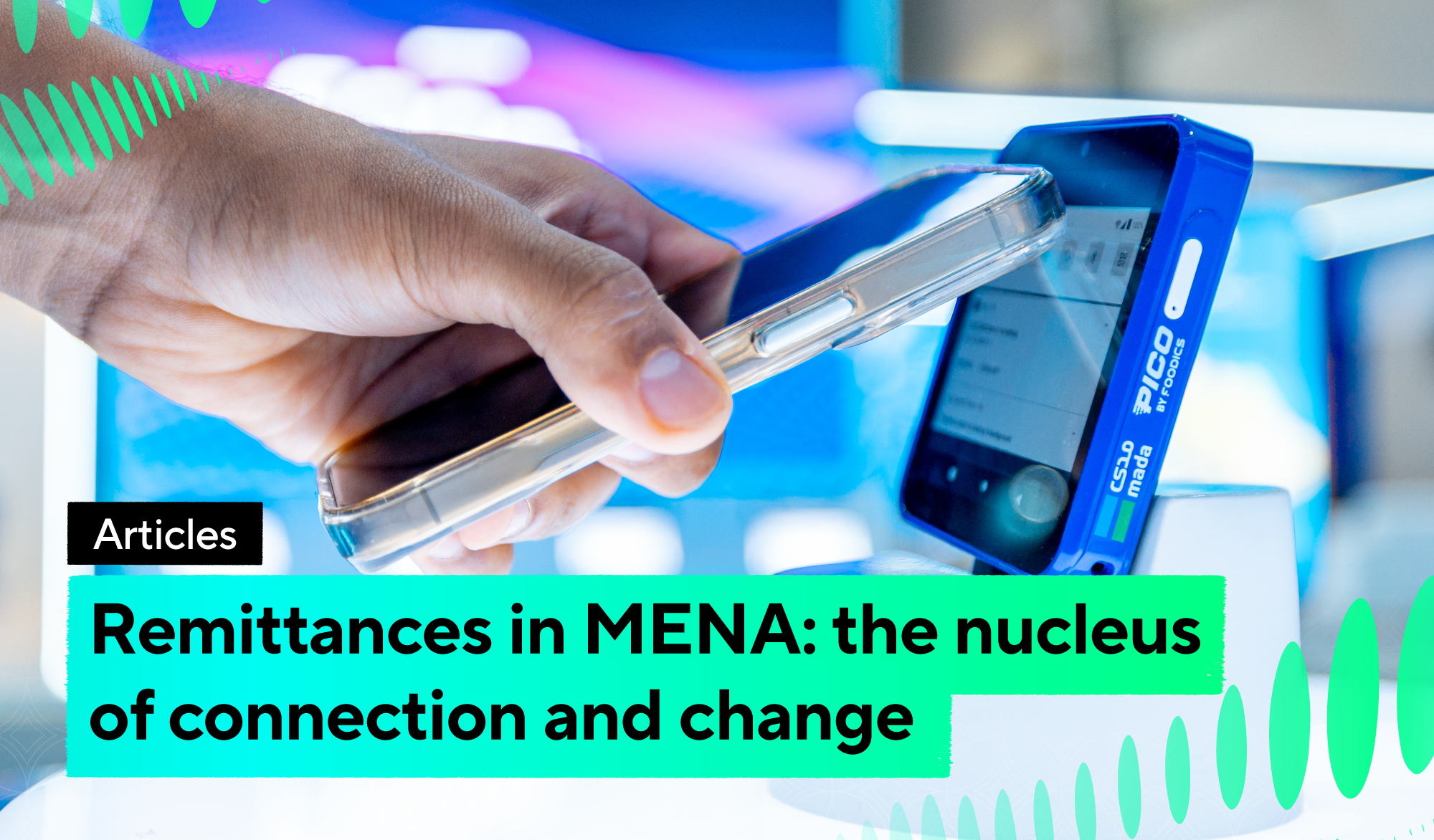
Every month, millions of quiet transactions ripple through the Middle East – the kind that rarely make headlines but shape lives, families, and entire economies. A palm grower in Riyadh sends part of their salary to Karachi. A nurse in Abu Dhabi transfers savings to Manila. A Lebanese engineer in Doha wires funds home to help parents weather inflation. More than just money transfers, these flows are a story of movement, resilience, and trust.
Remittances were a key topic for our speakers and attendees at Money20/20 Middle East 2025 – because this year they’ve become one of the world’s steadiest economic forces.
Globally, remittances set a high benchmark in 2024 at about USD $905 billion, which provided a firm base for 2025. Early this year, a report from The World Bank projected that flows to low- and middle-income countries would grow by approximately 2.8% in 2025 to roughly $690 billion. In recent years, these flows have rivalled (and often exceeded) FDI and aid as external finance for low- and middle- income countries (LMICs).
And the Middle East sits at the centre of it, as a major sender and a major receiver.
Few countries tell the 2025 story as clearly as Egypt. In Q2 2025, Egyptians abroad sent $10.1 billion, up from $7.4 billion a year earlier – one reason the current-account gap narrowed. Over July to May of the financial year 2024/25, total remittances reached about $32.8 billion, +69.6% year-on-year; across the first nine months, inflows rose 86.6% year-on-year to $26.4 billion.
And the GCC remains one of the world’s largest sources of outward remittances. In Saudi Arabia, expatriate transfers reportedly hit SAR 98.6 billion in Jan-Jul 2025 (+22.3% year-on-year), with July alone around SAR 15.2 billion. In the UAE, outward personal remittances reached AED 183 billion in 2024 (up from AED 169.2 billion in 2023); and detailed 2025 splits are pending from the central bank.
Importantly, behaviour is shifting. Research from Visa shows senders in the UAE and KSA increasingly using digital channels, while apps are the most popular way to receive funds in both markets. People cite speed, transparency and perceived security – but trust and fee clarity still matter.
Rather than just money in transit, we see remittances as circulating resilience. The GCC features among the world’s top sending economies; and remittances are inextricably interlinked with economic diversification strategies in the region.
At heart, each remittance is a decision rooted in care. And in 2025, the Middle East has proven that these quiet flows – powered by people and, increasingly, by tech – remain one of the strongest currencies of trust.
Gen Z in the Middle East isn’t hunting for another bank card. They want tools that smooth rent, spread school fees, and give them control in a cost-of-living crunch.
The Middle East is exploring ways to rebuild one of the world’s peer-to-peer finance networks – remittances – with stablecoins, CBDCs, and trusted fintech rails.
Gen Z in the Middle East isn’t hunting for another bank card. They want tools that smooth rent, spread school fees, and give them control in a cost-of-living crunch.
The Middle East is exploring ways to rebuild one of the world’s peer-to-peer finance networks – remittances – with stablecoins, CBDCs, and trusted fintech rails.