
Gen Z money in MENA: Fintech for rent and tuition (not just checkout)
Gen Z in the Middle East isn’t hunting for another bank card. They want tools that smooth rent, spread school fees, and give them control in a cost-of-living crunch.
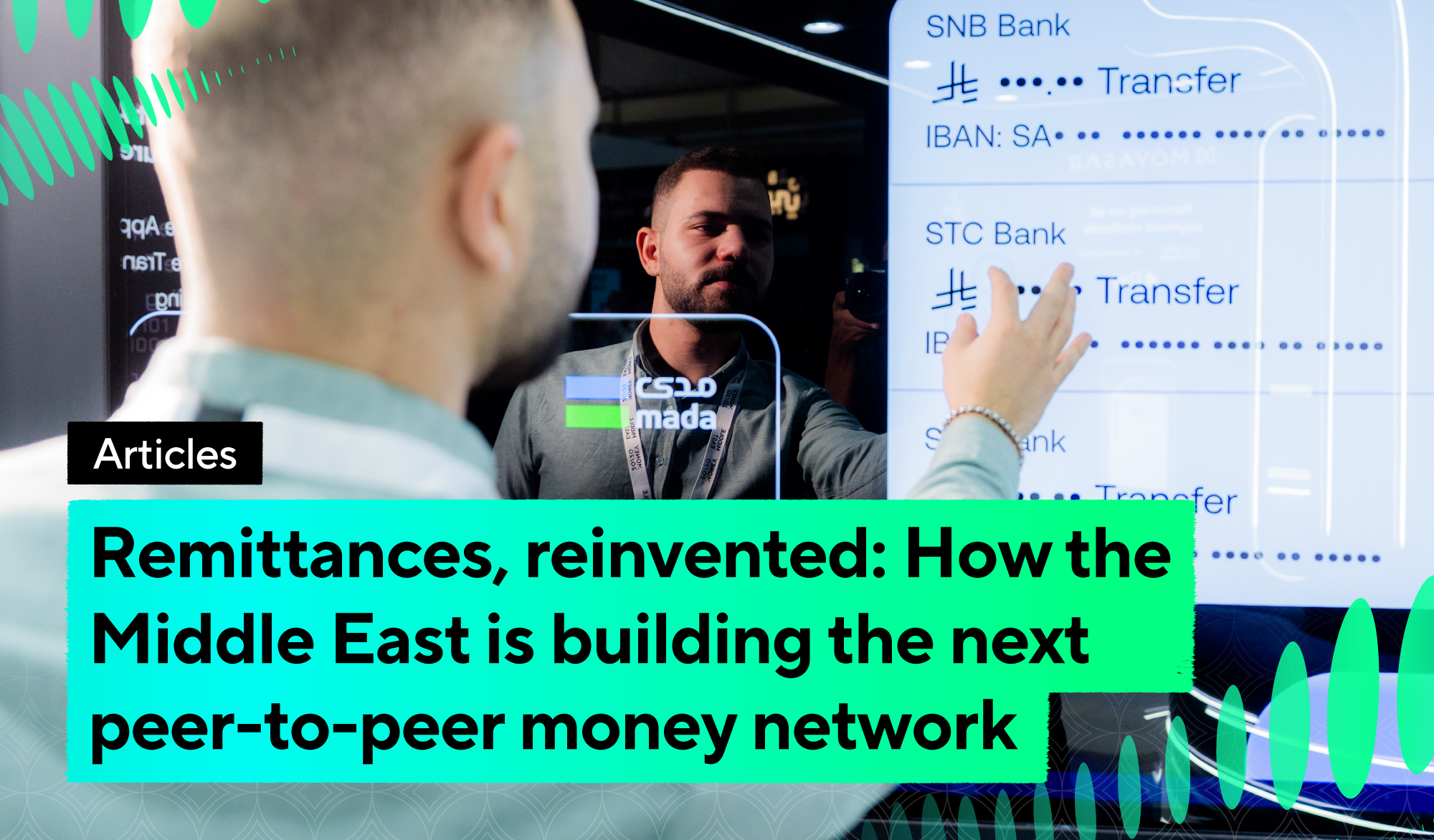
When you think about decentralised finance, you might focus on speculative currencies and token trading. But long before that, migrant workers quietly constructed the world’s first peer-to-peer financial web – sending money home reliably, month after month. Today, the GCC region is poised to rebuild that network using stablecoins, CBDCs, API rails, and governed blockchain frameworks; DeFi rooted in real trust and regulatory innovation.
The scale here is enormous. In 2024, officially recorded remittances into low- and middle-income countries (LMICs) were estimated to reach USD $685 billion, up 5.8% from 2023. That includes many corridors relevant to the GCC – South Asia, East Africa, and the Levant. At the same time, remittance costs remain stubborn: even efficient corridors frequently see 5–7% fees for relatively small transfers.
And across the GCC, remittance flows are a powerhouse. Data from Thunes shows that in 2023 GCC-origin remittances totaled $131.5 billion, with the UAE and Saudi Arabia leading the pack. In the UAE alone, some estimates suggest outbound remittances via exchange houses in 2022 hit AED 145.7 billion, with AED 105.9 billion (about USD $28.8 billion) of that classified as personal remittances.
These numbers tell two stories. First, that the region is a remittance engine; and second, that its rails are still clunky.
Across Dubai, Riyadh, Sharjah, and Jeddah, the remittance cycle looks familiar. A migrant worker clocks out, logs into a remittance app or visits an exchange house, sends funds, and a family member collects locally. Behind that is a complex weave of banks, MT (money transfer) operators, interbank correspondents, FX markups – and legacies built decades ago.
Now, fintech leaders are asking if that weave can be remade. If instead of three or four hops, we could use a permissioned ledger or cross-border CBDC channel to settle in seconds, with transparent FX.
The UAE is already laying parts of that groundwork. In 2024, the Central Bank introduced its Payment Token Services Regulation (PTSR), a legal framework governing issuance, custody, transfer, and conversion of ‘payment tokens’ (including stablecoins) within UAE territory.
While regulators across the region are cautious, the UAE is making clear moves to bridge tokenised stable value transfer and remittance plumbing. The UAE’s PTSR prohibits token services (issuance, custody, conversion) without licence, and restricts promotional activity of payment tokens unless regulated.
And at the same time, Saudi Arabia is advancing its payments infrastructure. The country’s domestic instant-payments system, Sarie, provides a starting point for domestic rapid clearing, and could serve as a structural support in future cross-border settlement.
The concentrated nature of Gulf-to-South Asia/East Africa corridors means that many remittance pairs are recurrent and high volume: India, Pakistan, the Philippines rank high in UAE outbound flows.
That density means building a single corridor with stablecoin-backed rails or CBDC bridges can demonstrate value quickly. And once trust and performance are proven, expansion follows more easily.
Recent fintech traction confirms the appetite. In October 2025, Wise was granted UAE regulatory licenses to operate domestic and cross-border transfer products. That move suggests incumbent operators are preparing for rails-level competition.
And discourse focused on stability is growing; Gulf News, for example, recently noted that stablecoins in remittance corridors can settle payments in minutes – bypassing layers of intermediaries and reducing cost.
Imagine this: a nurse in Abu Dhabi opens a wallet app. She inputs an amount, hits send to Dhaka.’ Behind the scenes, the system tokenises her dirham into a stablecoin (or digital dirham), settles it on a cross-border ledger link, converts it into taka, and deposits it into her family’s local bank or wallet – all in minutes, with full transparency of fees and FX.
No correspondent chains. No hidden spreads. No multi-day settlement. Just efficient value movement.
In this scenario, the value shifts from margins in intermediaries, to the rails themselves. Fintechs become infrastructure providers instead of just storefronts. Regulators gain visibility into flows in near-real time. And users get dignity – cheaper, faster, more predictable transfers.
Remittances are the hidden wiring of social and economic connectivity in the Middle East. Recasting them as DeFi – but built with discipline, trust, and regulation – is the long arc of change. And if we get it right here, other remittance hubs will watch and follow.
Gen Z in the Middle East isn’t hunting for another bank card. They want tools that smooth rent, spread school fees, and give them control in a cost-of-living crunch.
Learn how digital finance is accelerating in Saudi Arabia and the wider MENA region – from embedded finance to real-time payments and cross-border wallets.
Gen Z in the Middle East isn’t hunting for another bank card. They want tools that smooth rent, spread school fees, and give them control in a cost-of-living crunch.
Learn how digital finance is accelerating in Saudi Arabia and the wider MENA region – from embedded finance to real-time payments and cross-border wallets.