
Gen Z money in MENA: Fintech for rent and tuition (not just checkout)
Gen Z in the Middle East isn’t hunting for another bank card. They want tools that smooth rent, spread school fees, and give them control in a cost-of-living crunch.
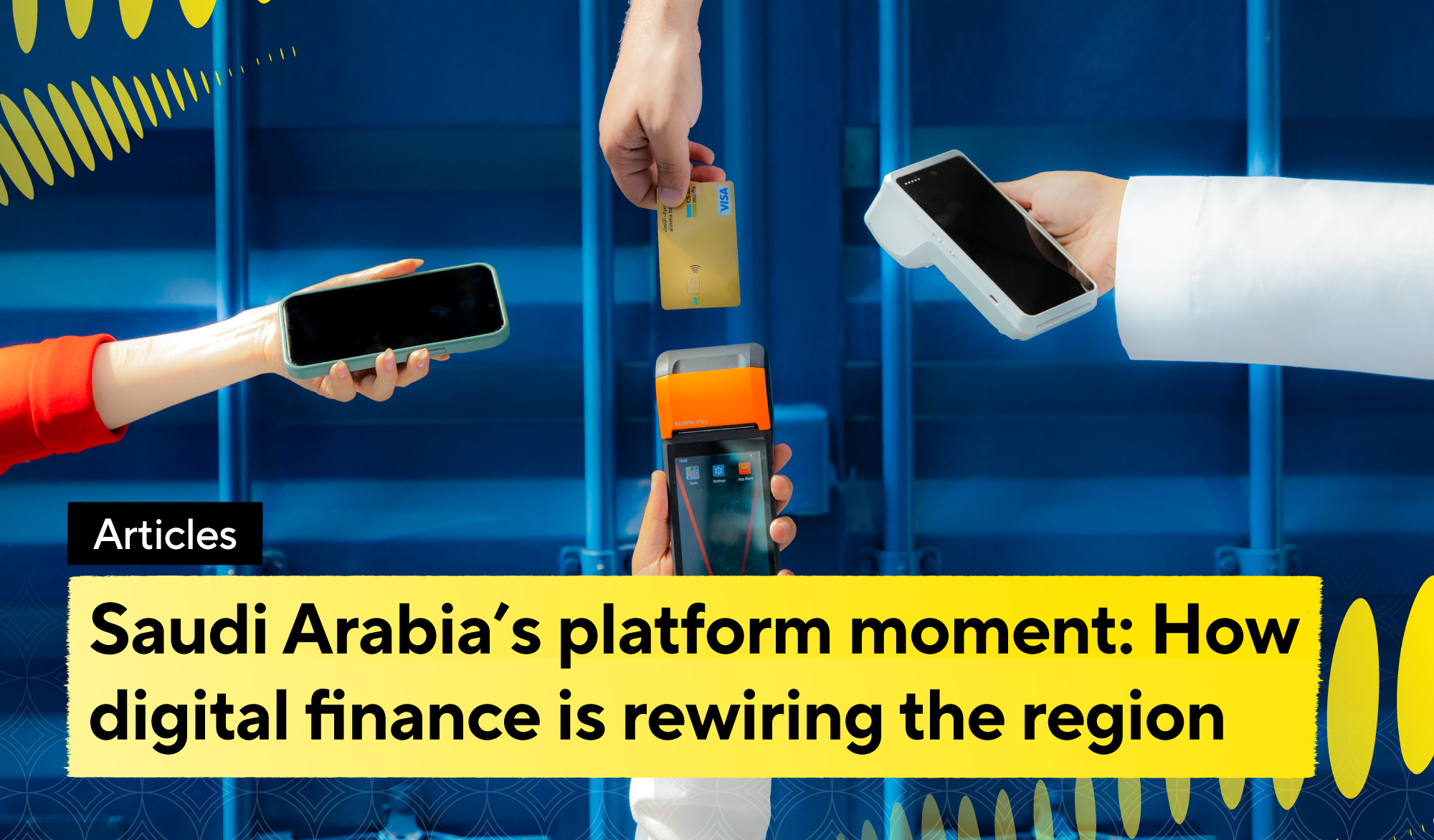
On a busy evening in Riyadh, buying groceries barely feels like a transaction. Tap, walk, done – for millions of people in Saudi Arabia, cash has slipped into the background; a change that’s happening faster than policymakers imagined it could.
In 2024, electronic payments made up 79% of all retail transactions, according to the Saudi Central Bank (SAMA). That milestone reflects extraordinary momentum; but it also shows that the country had already surpassed its 70% cashless target for 2025. SAMA’s 2024 report on financial sector development noted that Saudi Arabia processed 12.6 billion non-cash transactions in 2024, up from 10.8 billion a year earlier.
Beyond just a digital payments success story, this is a sign that the structure of finance is changing.
Globally, embedded finance (banking inside non-bank platforms) has become a heavyweight category. Estimates from leading research firms placed the market at around USD $100-110 billion in 2024, with forecasts exceeding $1 trillion by the early 2030s.
Across the MENA region, industry estimates vary, but they converge on the same narrative: the region’s embedded finance market was in the low-teens of billions of dollars in 2024, with many forecasts signalling a three to four-fold expansion by 2029. Definitions differ, but the direction is unmistakable – embedded finance is becoming a core distribution model for payments, credit and insurance.
For Saudi Arabia, this is significant. Platforms across retail, mobility, logistics, public services and the gig economy are turning into financial gateways. If you’re a fintech, the question is no longer whether to embed – but where.
Saudi Arabia’s acceleration is rooted in deliberate architectural choices. Under Vision 2030, the country has invested in real-time payments, open banking phases, digital-only banking licences and a national payment scheme designed for scale.
And as a result, fintech activity has surged. According to the Financial Sector Development Program’s annual report, 261 fintech firms were operating in the country by the end of 2024, exceeding its own 2025 target. And in his keynote at Money20/20 Middle East 2025, the SAMA Governor reported 82 licensed fintechs in 2022 rising to 281 by August 2025 – a rapid expansion in regulated players.
Saudi Arabia is also widening access to global wallets. SAMA has confirmed Google Pay’s launch on the national mada network and a partnership to enable Alipay+ acceptance by 2026. These may look like incremental features, but in reality, they’re part of a pivot towards cross-border interoperability.
Zoom out, and the regional rails are expanding too. Research from Mordor Intelligence indicates the MENA digital payments market could grow from around $250 billion in 2025 to over $420 billion by 2030. And McKinsey expects MENA fintech net revenues to grow around 35% annually to 2028, outpacing the global average of 15%.
Scale and speed are starting to reinforce each other.
As finance embeds everywhere, resilience becomes non-negotiable. PwC’s Middle East cyber survey shows 77% of organisations plan to increase cyber budgets, yet more than a third have suffered breaches costing over $1 million.
The takeaway here is that trust will determine who wins the next phase of digital finance.
Here, the GCC has an advantage. The UAE’s ADGM and Dubai’s VARA are building a multi-layered virtual assets framework that has already attracted billions in financial flows and dozens of licensed providers. Saudi Arabia is advancing methodically too, integrating global wallets while tightening financial crime controls.
Saudi Arabia’s digital finance leap isn’t just about going cashless. It’s the start of a platform era in which financial services become ambient, embedded and increasingly cross-border.
The Middle East is moving fast – and Saudi Arabia is becoming the place where digital finance stories begin.
Gen Z in the Middle East isn’t hunting for another bank card. They want tools that smooth rent, spread school fees, and give them control in a cost-of-living crunch.
The Middle East is exploring ways to rebuild one of the world’s peer-to-peer finance networks – remittances – with stablecoins, CBDCs, and trusted fintech rails.
Gen Z in the Middle East isn’t hunting for another bank card. They want tools that smooth rent, spread school fees, and give them control in a cost-of-living crunch.
The Middle East is exploring ways to rebuild one of the world’s peer-to-peer finance networks – remittances – with stablecoins, CBDCs, and trusted fintech rails.