
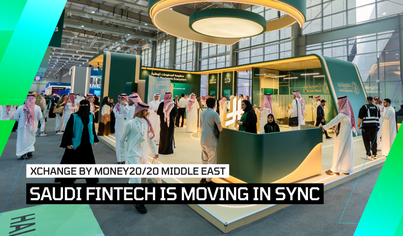
Saudi fintech is moving in sync
How Money20/20 Middle East is accelerating alignment across regulators, banks, and builders
Saudi Arabia’s fintech surge is accelerating fast – here’s what’s driving it.
Subscribe to join the Money20/20 Middle East community and receive weekly fintech insights, industry updates and expert perspectives direct to your inbox.
What happens when a country hits its cashless target years early? In Saudi Arabia, that already happened – so we can see the answer. You stop just digitising payments, and start redesigning the financial system.
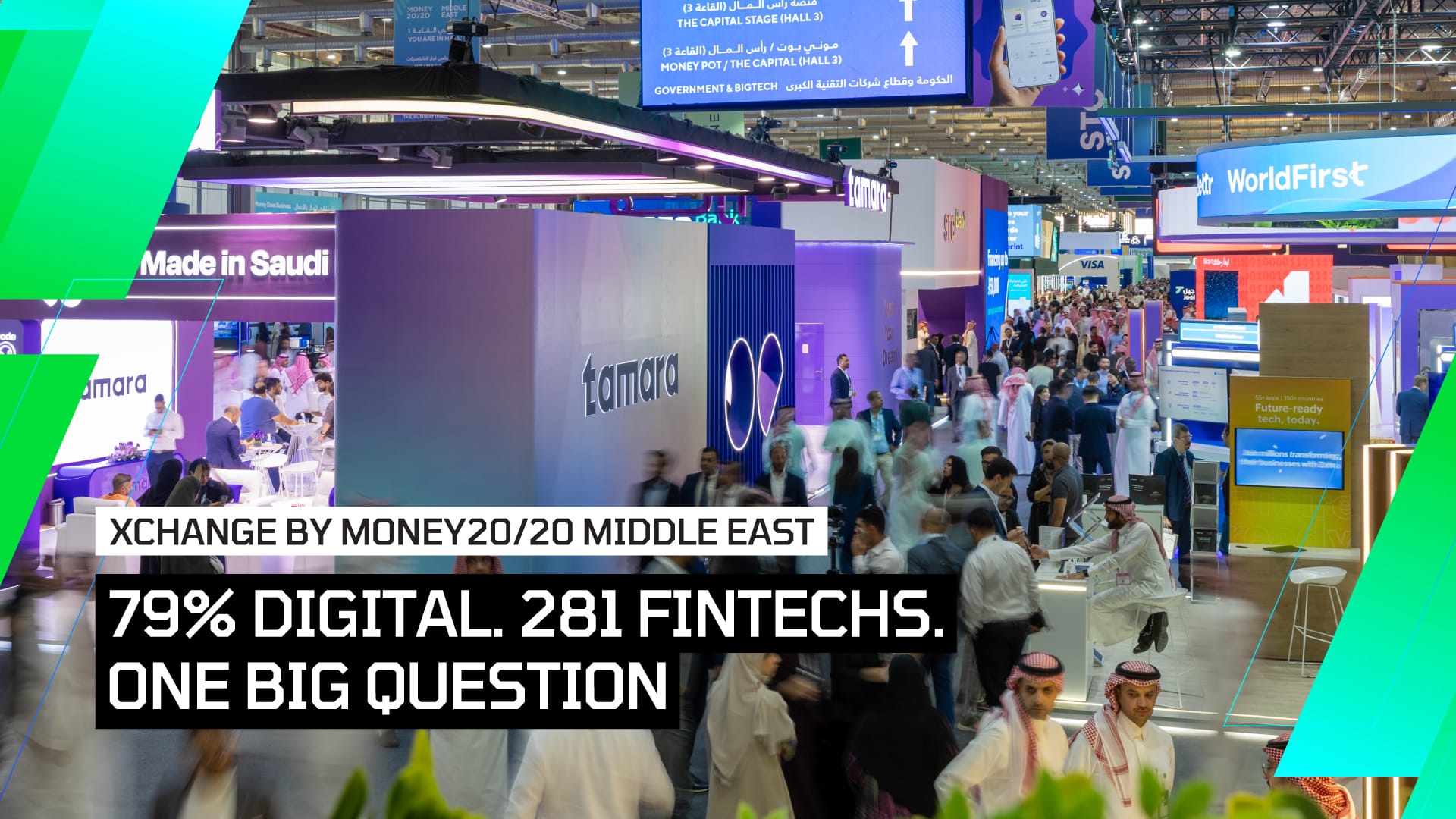
Walk into a supermarket in Riyadh and you’ll see it: payments have vanished into the background. In 2024, 79% of all retail transactions in Saudi Arabia were electronic (according to SAMA) – a milestone the country wasn’t meant to reach until 2025.
That’s 12.6 billion non-cash transactions in a single year – up from 10.8 billion the year before.
But we’re seeing a more interesting shift upstream. Platforms across mobility, retail, logistics and government services are turning into distribution channels for finance. Globally, embedded finance is already a USD $100-110 billion market and projected to exceed $1 trillion in the early 2030s. Regionally, MENA’s embedded finance estimates vary, but they all point to a 3-4x expansion by 2029.
Regulation is feeding the momentum – we wrote about it on the blog this week.
Research from Mordor Intelligence suggests the MENA digital payments market could grow from $250 billion in 2025 to over $420 billion by 2030. And McKinsey expects MENA fintech net revenues to grow 35% annually to 2028, more than double the global average.
Speed attracts ambition – and attention.
Carlos Menéndez (Chief Operating Officer at dLocal):
“In places like Saudi Arabia, payments are at the heart of a government agenda with ambitious targets for digital adoption. Local payment systems like Mada and Tamara are part of that strategy. By connecting those systems to the global economy, you more easily enable Saudi businesses to grow internationally and compete globally.”
(Follow dLocal on LinkedIn)
Mahmoud Ismail (Chief of Staff & Head of Acquiring and Payments MEA at Adyen):
"The economy is shifting from 'clicks' to 'conversations' thanks to agentic AI, creating zero-click commerce and operational disruption. For financial institutions, the ultimate competitive advantage will be built on proactive ethical AI frameworks and trust, not just technology."
(Connect with Mahmoud on LinkedIn)
We want your perspective – what do you think is the biggest force reshaping GCC fintech right now?
Open this newsletter on LinkedIn and tell us in the comments – or meet us at Money20/20 Middle East 2026, where the region’s next chapter takes shape.
Catch you next week,
The Money20/20 Middle East Team
How Money20/20 Middle East is accelerating alignment across regulators, banks, and builders
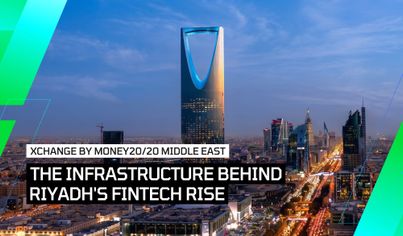
Inside KAFD and the ecosystem forming around Saudi fintech.
How Money20/20 Middle East is accelerating alignment across regulators, banks, and builders
Inside KAFD and the ecosystem forming around Saudi fintech.