
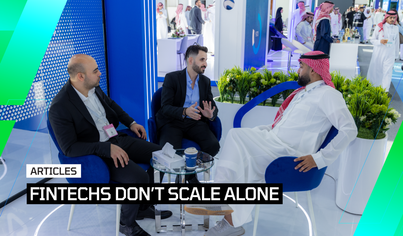
Fintechs don’t scale alone
How fintech companies scale: why ecosystems, partnerships, and investor networks matter more than product alone in driving growth and funding.
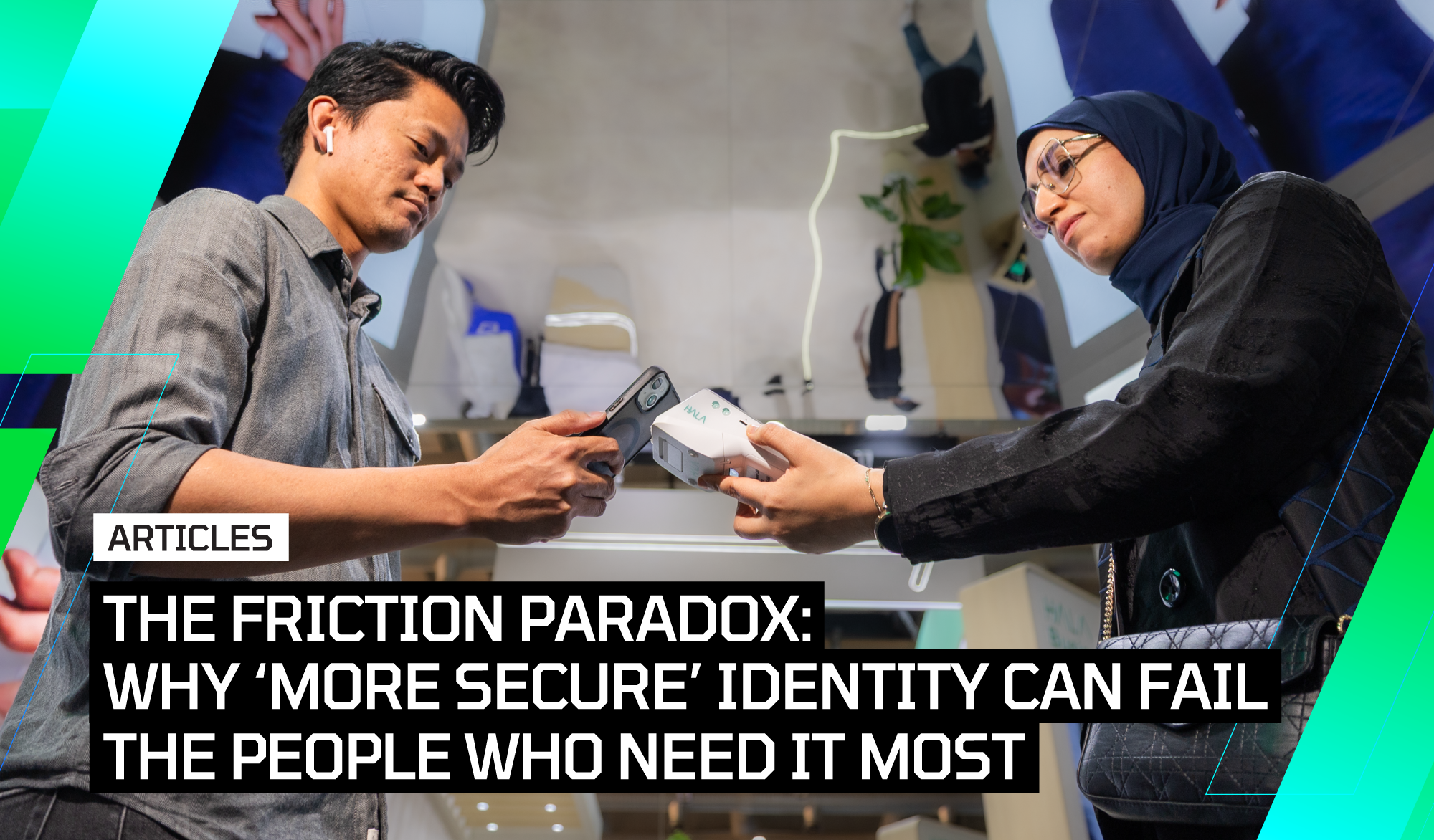
Stronger security is meant to make digital life safer. But for millions, it’s making access harder. This tension between protection and participation is becoming a key design challenge for fintechs around the world – and one that came up in conversation a lot at Money20/20 Middle East 2025.
The World Bank’s Identification for Development (ID4D) programme estimates that around 800 million people still lack legal ID, down from roughly 850 million in 2021.
The digital divide is even bigger. According to ID4D–Findex data, around 2.9 billion people still lack a digital ID they can use online.
And even where digital ID exists, usage is far from universal. In countries offering an online digital ID, only 32% of adults say they have one, and just 23% have ever used it.
Those excluded are disproportionately women, rural residents, low-income groups and younger adults – the same people for whom digital public services and inclusive finance can be most transformative.
The Global Findex shows that ‘lack of documentation’ consistently ranks among the top reasons unbanked adults cannot open an account.
Security meets real life – and real friction.
As fraud rises globally, we’re seeing security requirements tighten. Biometrics, device binding and multi-factor authentication (MFA) have become the norm. But evidence suggests that security steps often fail the users who need access most.
Research on MFA accessibility finds that common mechanisms (from one-time passwords to app-based prompts) pose challenges for users with disabilities for example; or those using older devices or unstable networks.
The result is that people abandon services and products during onboarding flows. That rarely shows up in the headline metrics, but it does define who actually makes it into the digital economy.
The GCC is moving fast on digital identity.
UAE Pass, the UAE’s secure national digital identity, enables citizens, residents and visitors to use a single account to access over 15,000 services from government, semi-government and private sector entities, and to sign documents digitally and securely, according to the UAE Digital Government (TDRA).
And in Saudi Arabia, the unified national access system (Nafath) allows users to interact with more than 500 government and private entities through a single sign-on portal, and has carried out over 3 billion verification operations since its launch, according to the Ministry of Interior and the Saudi Press Agency.
The region’s push is powered by ambitious digital transformation agendas, and growing adoption of biometrics and secure identity rails.
But the GCC’s success also highlights the challenge: high-assurance systems still need low-friction pathways. Migrant workers, refugees, and residents with low cost devices must be able to use core services without navigating heavy authentication flows. Security can’t assume connectivity or literacy – and trust can’t be engineered purely through cryptography.
We can’t relax security in order to solve the friction paradox. But we can develop better ways to bring people in, deliver relevant services, and make sure those services can adapt to different situations.
The systems that truly solve the problem will be the ones people trust enough to use every single day.
Identity is now the backbone of the modern economy. Payments, lending, government services, travel — all of it depends on making trust portable.
The opportunity here is to design security that adapts, and doesn’t obstruct. Assume diverse users, uneven connectivity and a spectrum of devices. And build for inclusion, not ideal conditions.
Be part of the conversation on digital identity and inclusion at Money20/20 Middle East 2026.
How fintech companies scale: why ecosystems, partnerships, and investor networks matter more than product alone in driving growth and funding.
Fintech is shifting from access to participation. Find out why ecosystems (not audiences) will define the next phase of growth in MENA and beyond.
How fintech companies scale: why ecosystems, partnerships, and investor networks matter more than product alone in driving growth and funding.
Fintech is shifting from access to participation. Find out why ecosystems (not audiences) will define the next phase of growth in MENA and beyond.