
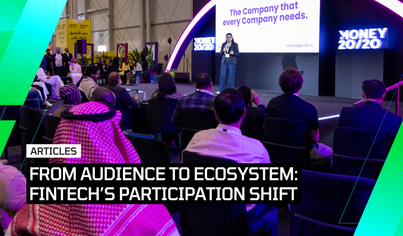
From audience to ecosystem: fintech’s participation shift
Fintech is shifting from access to participation. Find out why ecosystems (not audiences) will define the next phase of growth in MENA and beyond.
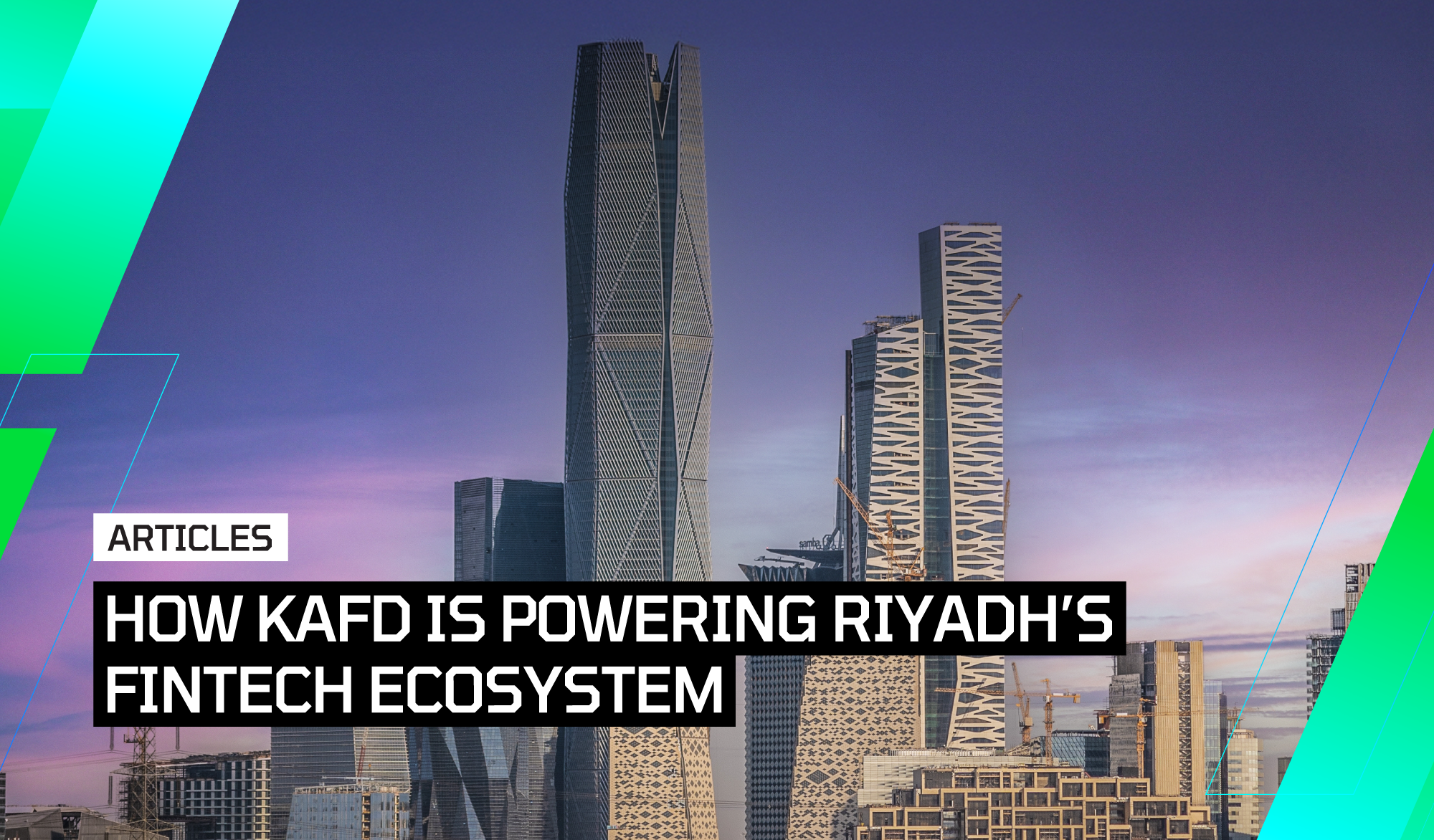
Walk through King Abdullah Financial District (KAFD) in Riyadh and the first impression is architectural: gleaming towers, shaded walkways and a skyline shaped by global design firms.
But beneath that skyline is where the deep work is happening. KAFD spans 1.6 million square metres and includes approximately 95 buildings, across offices, residential space, hospitality and retail. Rather than developing slowly over time like most global financial centres, the district was designed as part of Saudi Arabia’s broader economic transition.
Its ownership reflects that ambition. KAFD is operated by KAFD Development and Management Company, a wholly owned subsidiary of the Public Investment Fund (PIF) – Saudi Arabia’s sovereign wealth fund.
This sovereign capital combined with cutting-edge urban planning and economic strategy gives the district a distinctive role. KAFD functions as financial infrastructure for the nation’s next phase of growth.
And for the fintech sector, that creates opportunities that are hard to find elsewhere in the world.
Financial centres tend to grow as markets expand around them. KAFD, on the other hand, was planned as a cluster from the beginning.
Today the district hosts more than 140 commercial tenants and 19 regional headquarters of multinational firms.
This concentration creates a dense network, including:
For financial technology companies, that environment provides something essential: immediate proximity to customers, partners and regulators.
Saudi Arabia’s Vision 2030 strategy places financial services and innovation at the centre of economic diversification. And Riyadh has increasingly become the focal point of that shift.
Fintech ecosystems can flourish where three elements intersect – financial institutions, capital and regulatory engagement. KAFD compresses those ingredients into a single district. And the effect is a powerful network dynamic – founders can meet banks and institutional partners within walking distance; investors can move between startups, venture firms and corporates in the same afternoon.
In fast-growing ecosystems, proximity accelerates trust – and trust accelerates deals.
The district’s design reflects how financial work is evolving.
KAFD was conceived as a ‘vertical city’, connecting towers through a network of 42 climate-controlled pedestrian skywalks that allow people to move easily between buildings even during Riyadh’s hottest months. The skywalk network spans more than 15 kilometres, making it the largest continuous pedestrian skyway system in the world.
Transport infrastructure is another cornerstone. The district is anchored by the KAFD Metro Station, designed by Zaha Hadid Architects, which connects multiple lines of the Riyadh Metro network and links the district to the wider city.
A 3.6-kilometre driverless monorail system with six stations is also under development to improve mobility within the district itself.
Sustainability has been built into the project as well. KAFD holds LEED-ND Stage 2 Platinum certification, recognised as the largest project in the world to achieve this rating for neighbourhood development.
For international firms expanding in the Middle East, these elements point to a financial hub built to global standards – and designed with long-term growth in mind.
Financial districts succeed when the surrounding ecosystem grows with them. That transformation is already underway in Saudi Arabia.
Regulatory reforms, a rapidly expanding startup environment and strong sovereign investment are accelerating fintech activity across the Kingdom. KAFD provides a physical centre where those forces can converge.
If you’re a founder, you can operate side-by-side with banks, venture capital firms, multinational corporations and emerging technology companies – giving you access to an environment where collaboration happens naturally.
KAFD reflects a different model for building financial centres.
Rather than waiting for markets to cluster over decades, Riyadh has created a district where policy, capital, infrastructure and talent intersect from the outset. That convergence can accelerate ecosystem development – particularly in sectors like fintech that depend on close collaboration between regulators, financial institutions and technology firms.
The skyline of KAFD hints at what’s happening beneath – an infrastructure evolution that’s driving the future of finance in the region.
Fintech is shifting from access to participation. Find out why ecosystems (not audiences) will define the next phase of growth in MENA and beyond.
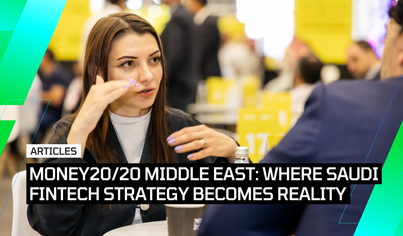
Find out how Money20/20 Middle East is supporting Saudi Arabia’s fintech growth, accelerating Vision 2030 ambitions and aligning regulators, banks, startups and investors.
Fintech is shifting from access to participation. Find out why ecosystems (not audiences) will define the next phase of growth in MENA and beyond.
Find out how Money20/20 Middle East is supporting Saudi Arabia’s fintech growth, accelerating Vision 2030 ambitions and aligning regulators, banks, startups and investors.