
From audience to ecosystem: fintech’s participation shift
Fintech is shifting from access to participation. Find out why ecosystems (not audiences) will define the next phase of growth in MENA and beyond.
Under Vision 2030, fintech sits at the heart of Saudi Arabia’s Financial Sector Development Programme. There are clear ambitions around financial inclusion, SME growth and a digital-first economy.
The numbers already show the pace of change. Saudi Arabian fintech firms grew from just 10 in 2018 to 261 in 2024, while 70% of retail payments were electronic in 2023 and 96% of point-of-sale transactions were contactless.
These figures reflect system-level transformation. And that’s exactly why Money20/20 Middle East is a key platform for the future.
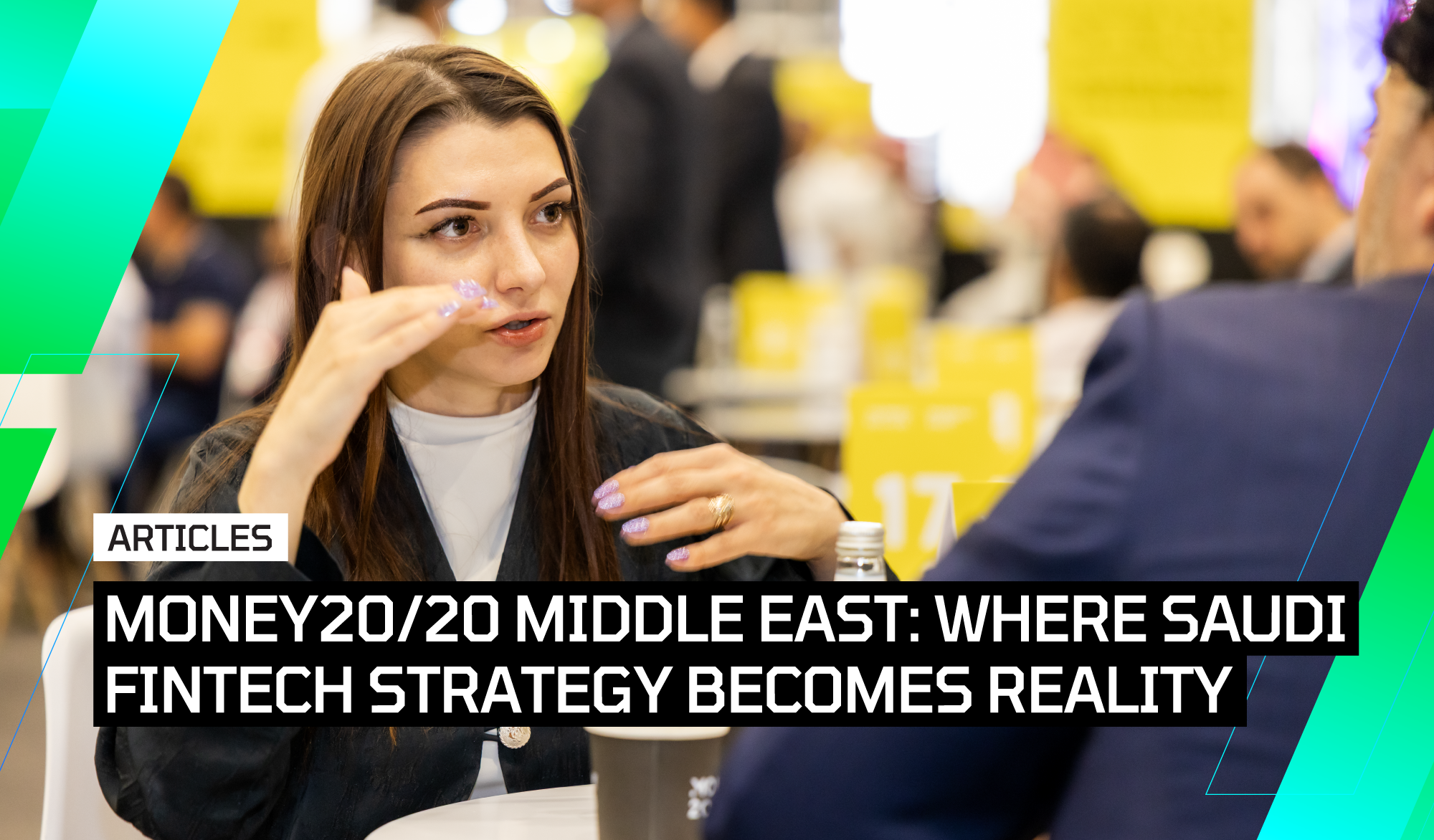
Money20/20 Middle East 2025 brought together more than 450 fintech companies and over 1,050 global investors, and served as one of the few places where regulators, legacy banks, fintech startups and investors could meet under one roof to compare strategies and align on priorities.
In most markets, those conversations happen separately. In Saudi Arabia, they are increasingly happening together.
This is critical – because the nation’s fintech growth depends on coordination as much as capital. Regulators are building frameworks through SAMA and the CMA. Banks are modernising legacy systems. Startups are launching products across payments, lending, open banking and infrastructure. And international players are entering with new tools and partnerships.
Money20/20 Middle East gives the ecosystem a place to accelerate that work.
At the 2025 event, we asked Nicole Valentine, FinTech Director at the Milken Institute, to describe the event in three words:
“Big, dynamic, and diverse. I mean, the amount of people I’ve been meeting from around the globe, and the people I’ve been meeting from the institutional side, from the government side, from the founder side – it’s just been a really big moment in our time, and I’m seeing a lot of collaboration and harmonisation while people are coming together to talk about all the big issues in fintech.”
That idea of collaboration and harmonisation reflects how Saudi Arabia is building its fintech ecosystem: across government, institutions and founders simultaneously.
The ecosystem itself is evolving fast.
Payments remain the dominant segment, accounting for roughly a third of fintech activity, but growth is also visible in SME lending, open banking, regtech and cybersecurity.
According to figures from ConsultFeer, Saudi SME credit facilities have reached SAR 351.7 billion, up 27.62% year on year, while the cybersecurity sector reached SAR 13.3 billion in 2023.
In other words, the market is getting deeper, not just bigger.
Each of these layers requires coordination between regulators, financial institutions and technology providers – exactly the kind of interaction that benefits from a shared platform.
Saudi Arabia has already built the foundations for fintech growth. Targets for adoption, investment and ecosystem expansion are being met – and in some cases exceeded.
The question now is how quickly the ecosystem can scale and integrate globally.
And this is where convening power becomes strategic at an international level.
Events are often seen as showcases. But for Saudi Arabia, Money20/20 Middle East is increasingly functioning as a coordination point: a place where policy discussion, product innovation, investment appetite and regional ambition meet at speed.
And in the fintech sector, we have to move fast.
Fintech is shifting from access to participation. Find out why ecosystems (not audiences) will define the next phase of growth in MENA and beyond.
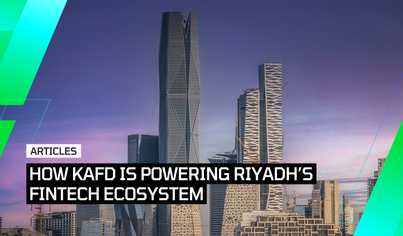
King Abdullah Financial District (KAFD) is emerging as the infrastructure behind Riyadh’s fintech rise – where capital, policy and talent converge.
Fintech is shifting from access to participation. Find out why ecosystems (not audiences) will define the next phase of growth in MENA and beyond.
King Abdullah Financial District (KAFD) is emerging as the infrastructure behind Riyadh’s fintech rise – where capital, policy and talent converge.