
From audience to ecosystem: fintech’s participation shift
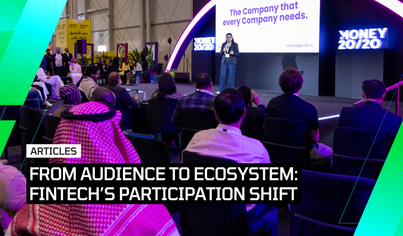
Fintech is shifting from access to participation. Find out why ecosystems (not audiences) will define the next phase of growth in MENA and beyond.
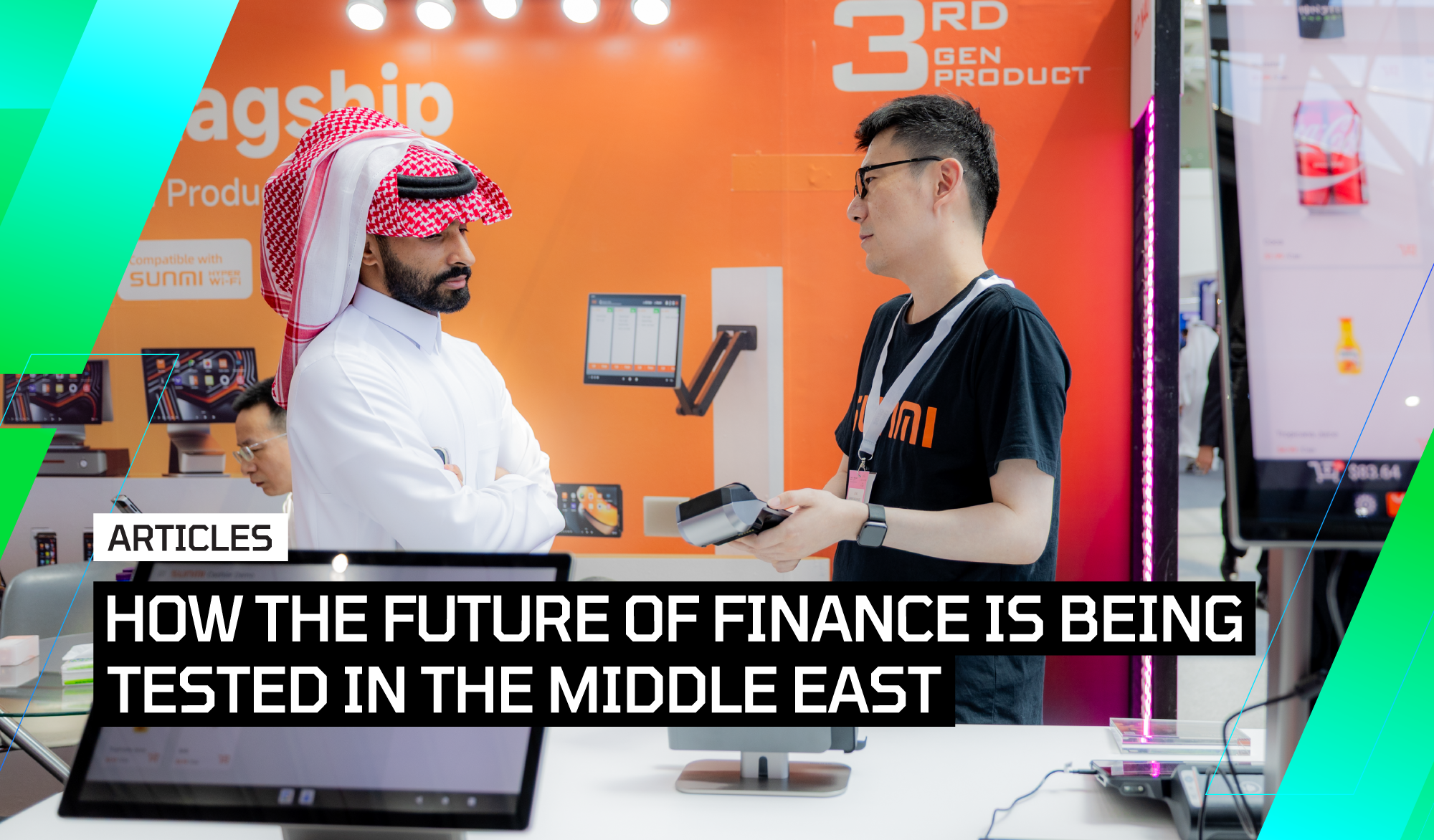
For decades, financial innovation followed a gentle rhythm. New tech would emerge elsewhere in the world, mature cautiously, and then eventually arrive in the Middle East.
But today, the region isn’t waiting for the future of finance to be imported. It’s co-designing it, often alongside global regulators, banks and technology firms. Emerging from this are entirely new ways to move money, make decisions, and engineer trust.
Here’s our quick lowdown on the technologies doing this future-building work, and why we’re dedicated to building a platform for technologists, finance leaders, and government regulators to collaborate at Money20/20 Middle East.
AI has been part of financial services for years now. But AI with agency is new. Instead of just analysing data, AI is starting to take decisive action.
That move is visible inside Dubai’s financial ecosystem. A 2025 survey by the Dubai Financial Services Authority found that 52% of DFSA-authorised firms now use AI, up from 33% in 2024, with generative AI adoption rising by 166% year-on-year.
And the most interesting shift is towards agentic AI, which actually executes actions based on its own recommendations.
That’s why Mastercard chose the UAE for the first international deployment of Agent Pay, an AI-powered payments pilot that allows software agents to search, select and complete transactions on a user’s behalf. The launch (in partnership with Majid Al Futtaim and fintech Dataiera) marked the first Agent Pay transaction outside the United States.
Banks are retooling internally too. First Abu Dhabi Bank’s strategic partnership with Microsoft, announced in April 2024, focuses on embedding AI across banking operations and product design, including advanced analytics and decision-support capabilities.
All of this shows that AI isn’t just a side project in the region. It’s fast becoming core infrastructure.
Increasingly, innovators are exploring how to use distributed ledger technology to change how money itself works.
One example of this is Project mBridge, led by the BIS Innovation Hub. The project reached minimum viable product stage in mid-2024, demonstrating a multi-central bank digital currency platform that enables real-time, cross-border payments and settlement using distributed ledger technology.
The Central Bank of the UAE has been involved since early phases, and the Saudi Central Bank formally joined the platform in mid-2024, underlining GCC participation in re-engineering global payment rails.
Private markets are moving in parallel. In January 2025, Dubai-based developer DAMAC signed a USD $1 billion deal with blockchain platform MANTRA to tokenise real-world assets – one of the region’s largest tokenisation commitments to date.
And legal infrastructure is being developed to support this experimentation. Abu Dhabi Global Market’s DLT Foundations Regulations, for example, enacted in October 2023, provide a dedicated framework for blockchain-native entities and token-based structures.
Sometimes, emerging tech looks futuristic; but sometimes, it looks like plumbing.
In October 2023, the UAE launched Aani, a domestic instant payments platform operated by Al Etihad Payments, a subsidiary of the Central Bank of the UAE. The platform enables real-time transfers between individuals and businesses and forms a core pillar of transformation efforts.
And Saudi Arabia is taking a complementary approach through regulation. The Saudi Central Bank has rolled out its open banking framework in staged releases, including a framework governing payment initiation services, requiring banks to open access to data and payment rails under regulatory oversight.
Together, instant payments and open banking are turning financial services into components – embeddable, interoperable, and increasingly invisible to the end user.
Instead of being all about technology, one of the region’s most under-appreciated innovations is regulatory.
Abu Dhabi Global Market launched its RegLab in 2016, creating a controlled environment where fintech firms can test new business models under regulatory supervision. And Dubai followed with FinTech Hive, connecting startups, banks and regulators through accelerator programmes hosted at the DIFC Innovation Hub.
Along with other initiatives, the result is a region where emerging technologies are not simply tolerated, but designed alongside supervisors – a critical advantage in areas like AI, blockchain and digital assets, where regulatory uncertainty elsewhere has slowed adoption.
Taken individually, none of these technologies or initiatives are silver bullets. But if we look at them all together, they point to something bigger; a future of finance that’s shaped by AI that acts, money that can be programmed, infrastructure that adapts, and regulation that enables experimentation without chaos.
The Middle East is leaning into all four early, and with intent. That’s why we know the next chapter of global financial innovation won’t just pass through the region. Increasingly, it will be written here.
Join the conversation at Money20/20 Middle East 2026, where the builders, regulators and investors driving this future meet (and challenge each other) in person. We’ll see you there.
Fintech is shifting from access to participation. Find out why ecosystems (not audiences) will define the next phase of growth in MENA and beyond.
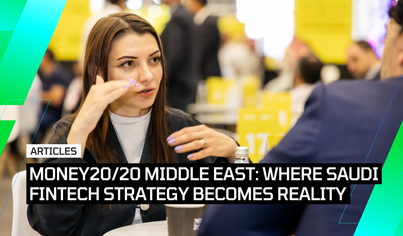
Find out how Money20/20 Middle East is supporting Saudi Arabia’s fintech growth, accelerating Vision 2030 ambitions and aligning regulators, banks, startups and investors.
Fintech is shifting from access to participation. Find out why ecosystems (not audiences) will define the next phase of growth in MENA and beyond.
Find out how Money20/20 Middle East is supporting Saudi Arabia’s fintech growth, accelerating Vision 2030 ambitions and aligning regulators, banks, startups and investors.